
Destiny · Father · Life · Memories

The Power of Small Wins: Why Progress Beats Perfection

Life doesn’t always hand us a steady rhythm. The last eight months of my life have been a blur of grief – I lost my dad and two young brothers, three blows that hit harder than I could’ve ever prepared for —a gut punch that left me questioning fairness, wrestling with anxiety, and feeling the weight of depression!!!

Anxiety and depression became uninvited guests, lingering in the corners of my mind. There were days I didn’t want to get out of bed, let alone show up for work or pretend I had it all together.

Energy? Gone.

Mental state? Far from perfect.

But life doesn’t pause, does it? The world keeps spinning, responsibilities pile up, and somehow, life demands we keep going.

That’s when I stumbled—accidentally, messily—into the power of small wins. I’m not here to preach some polished self-help mantra. This isn’t about “hustle harder” or chasing perfection. It’s about what I’ve learned when perfection felt impossible: progress, even the tiniest step, can be a lifeline.

The Weight of Perfection

Before this year, I was all about the big goals. The flawless execution. The picture-perfect outcomes. I’d beat myself up if a project wasn’t 100% right or if I didn’t hit some lofty target. Sound familiar? Maybe you’ve been there too stuck in the trap of thinking “good enough” isn’t enough.

But grief stripped that away. When you’re reeling from loss, perfection isn’t even on the table. I couldn’t aim for a grand slam; I could barely swing the bat. And yet, life demanded I keep going. So, I started small—really small.

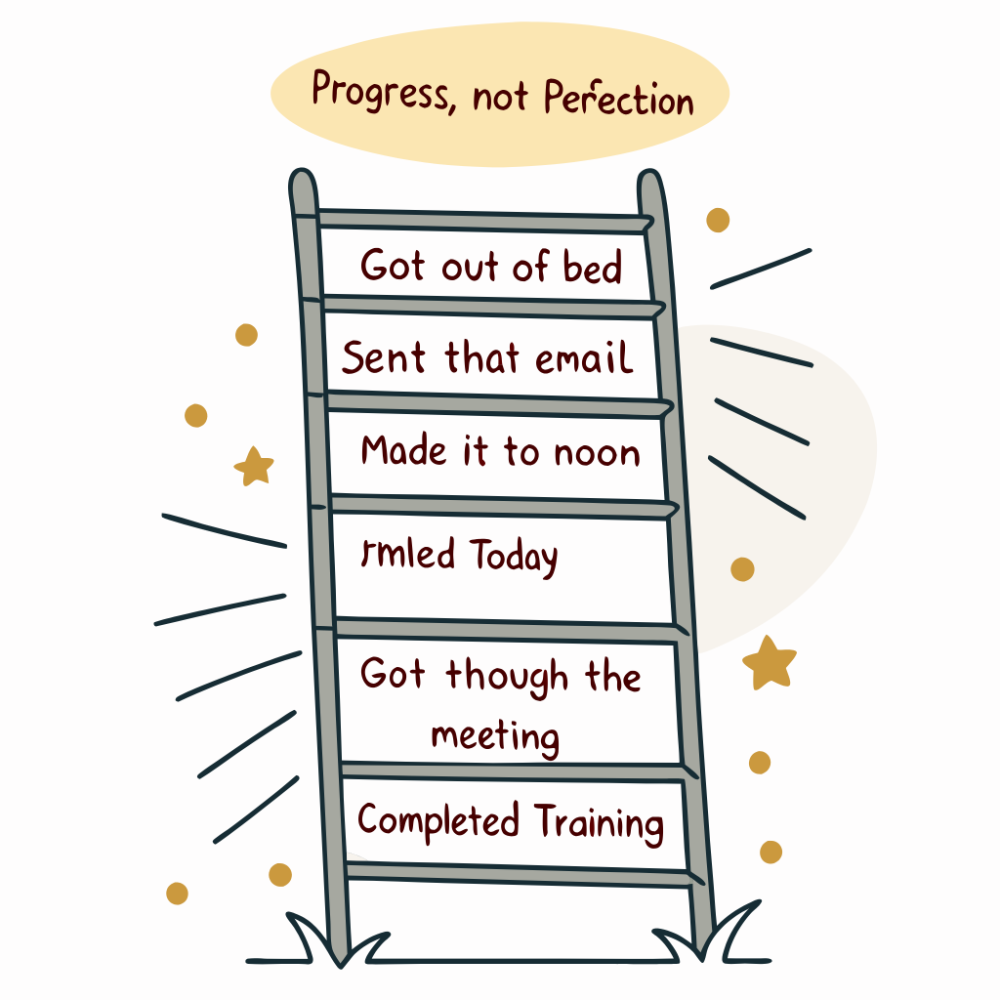
One day, it was just replying to an email I’d been avoiding. Another day, it was getting through a meeting without breaking down. These weren’t victories I’d have celebrated before. But in the fog of anxiety and depression, they felt monumental.

Why Small Wins Matter

Here’s the thing: small wins aren’t just baby steps—they’re proof you’re still in the game. Science backs this up. Researchers like Teresa Amabile have shown that making consistent, meaningful progress—even in tiny doses—boosts motivation, creativity, and resilience. It’s not about the size of the win; it’s about the signal it sends to your brain: I can do this. I’m still here.

For me, those little victories became anchors. Finishing a task didn’t erase the pain, but it gave me something to hold onto. A reason to try again tomorrow. And over time, those small wins started stacking up—quietly, imperfectly—until I could see a path forward.

Progress, not perfection

Progress Beats Perfection Every Time

Perfection is a myth anyway, right? It’s this shiny carrot we chase, thinking it’ll make us happy, successful, or “enough.” But it’s exhausting—and when life throws curveballs, it’s downright paralyzing. Progress, though? Progress is real. It’s messy, it’s human, and it’s within reach—even on the hardest days.

I’ll be honest: I’m still figuring this out. Some days, my small win is just getting through without spiraling. Other days, it’s a work project I’m proud of. But I’ve stopped waiting for the perfect moment or the perfect me to show up. I’m learning to celebrate the fact that I’m moving at all.

Your Turn: Start Small, Win Big

If you’re reading this and feeling stuck—whether it’s grief, burnout, or just the weight of expectations—give yourself permission to start small. Forget the grand overhaul. What’s one tiny thing you can do today? Reply to that message? Take a walk? Jot down an idea. It doesn’t have to be perfect. It just has to be progress.

Because here’s what I’ve learned: those small wins don’t just keep you going—they build something bigger. They’re the foundation for coming back to life, one step at a time.

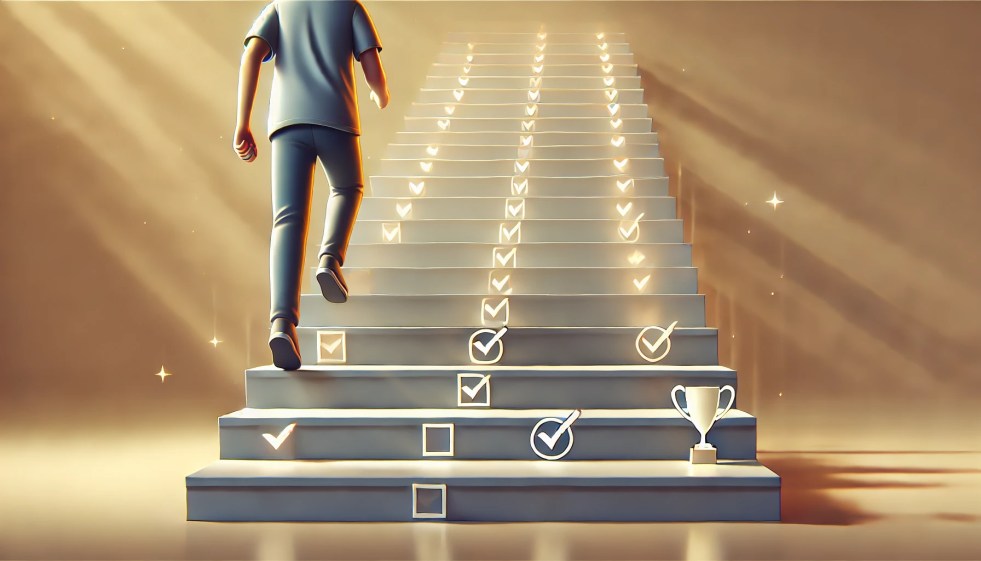
Progress lights the way

So, here’s my challenge to you: celebrate a small win today. Share it in the comments if you want—I’d love to cheer you on. Let’s stop chasing perfection and start building momentum instead. Because even on the darkest days, progress is power.

Uncategorized

Book 1 of 2024 : The House Across the Lake by Riley Sager

Picture this: an idyllic Vermont lake resort, where the water sparkles like a thousand diamonds. Casey Fletcher, a recently widowed actress, seeks solace from her tumultuous past. She retreats to her family’s lakeside home, hoping for tranquility. But fate has other plans. Enter Katherine Royce, Casey’s glamorous neighbor—a former supermodel married to the enigmatic CEO of a tech company. As Casey peers through her binoculars, she becomes an unwitting voyeur, drawn into the web of secrets that shroud the Royce family.

The lake, once a symbol of serenity, now mirrors the murky depths of hidden truths. Casey’s curiosity propels her deeper into the lives of the Royces, and what she discovers will change everything. The novel masterfully blends suspense, mystery, and psychological intrigue, leaving readers on the edge of their seats.

Quotes That Echo Beyond the Lake

  1. “There’s no such thing as happily ever after. There’s only happy for a short period of time before everything falls apart.” — Riley Sager This haunting truth reverberates throughout the narrative. Casey grapples with the impermanence of joy, a theme that resonates with us all.
  2. “The lake held its secrets close, like a lover’s whispered promise.” — Riley Sager The lake becomes a silent witness, concealing both beauty and treachery. Its depths mirror the human psyche—calm on the surface, turbulent below.
  3. “Binoculars are like truth serum. They reveal what we’re not meant to see.” — Riley Sager Casey’s binoculars become her confidante, exposing the Royces’ hidden lives. But truth comes at a cost—is it worth the price?
  4. “Behind every perfect facade lies a fractured reality.” — Riley Sager Katherine Royce’s flawless exterior belies a fractured soul. The novel delves into the masks we wear and the cracks beneath.
  5. “The lake doesn’t forget. It holds memories in its ripples, waiting for someone to listen.” — Riley Sager The lake becomes a metaphor for memory. Its ripples echo past deeds, waiting for Casey to decipher their secrets.

Netflix Adaptation: A Visual Journey

Netflix recognizes the novel’s cinematic potential. The streaming giant is set to adapt The House Across the Lake into a feature film. Prepare for suspense, stunning visuals, and a fresh take on classic mystery.

Whether you’re a seasoned mystery enthusiast or a newcomer to the genre, this book promises an unforgettable ride. Dive into the depths of secrets, and remember—the house across the lake holds more than meets the eye.

🔍🌟 #BookRecommendation #Thriller #Mystery #MustRead

Binge Watching

Unraveling the Charms of “Lupin”


So, I recently stumbled upon this gem of a series, “Lupin,” and let me tell you, it’s like a breath of fresh air in the world of crime dramas. Inspired by the classic character Arsène Lupin, this French show is not just about heists; it’s a rollercoaster of clever plot twists and unexpected life lessons.

My key takeaways :

  1. The Art of Deception:
    Okay, let’s talk about Assane Diop, our modern-day gentleman thief. He’s got this knack for deception that’s both jaw-dropping and kinda inspiring. “Lupin” got me thinking – how often do we question the surface and explore what lies beneath? It’s like a crash course in strategic thinking that sneaks up on you while you’re just trying to enjoy a good story.
  2. Rolling with the Punches:
    Assane’s life is one wild ride, filled with setbacks and curveballs. But here’s the thing – he doesn’t let it break him. Instead, he evolves, adapts, and keeps you on the edge of your seat. It got me reflecting on my own moments of chaos – turns out, resilience is not just a buzzword; it’s a survival skill we all have, and “Lupin” gives it a stylish makeover.
  3. Heists and Social Commentary? Yes, please!:
    Can we take a moment to appreciate how “Lupin” manages to be more than just a heist series? It’s like a subtle nudge, urging us to open our eyes to the injustices around us. Assane’s quest for justice becomes a mirror reflecting societal issues. Suddenly, it’s not just about stolen jewels; it’s about stealing the spotlight for causes that matter.
  4. Family Drama with a Twist:
    Who would’ve thought a series about a charming thief could tug at your heartstrings with family drama? Assane’s love for his son is woven into the storyline, making you think about the delicate balance between chasing dreams and being there for your fam. It’s like a crash course in adulting, served with a side of emotional rollercoaster.
  5. Brains Over Brawn – Refreshing, Right?:
    In a world where action heroes usually rely on their biceps, “Lupin” takes a different route. Assane uses his brainpower to outsmart everyone, proving that intelligence is seriously underrated. It’s a cool reminder that you don’t always need a superhero physique to conquer challenges – sometimes, a well-timed wit does the trick.


If you’re looking for a series that’s not just entertaining but also makes you ponder life’s twists and turns, this one’s a winner. Give it a shot, and who knows, you might end up questioning everything from the next plot twist in a series to your own resilience in the face of unexpected heists we call life. Cheers to the binge-watching adventures that leave you with more than just a screen full of credits!

General · Insight · Life

Finding your tribe

We are the sum of all people we have ever met; you change the tribe and the tribe changes you.

– Dirk Wittenborn

Finding your tribe – or a group of like-minded people – is an important part of your personal growth and development. Your tribe is a group of people who share your values, interests, and experiences, and who can provide you with the support, encouragement, and accountability you need to thrive. Here are a few reasons why finding your tribe is important for empaths, and how to connect with like-minded people:

  1. Your tribe can provide you with a sense of belonging and connection. As an empath, you may feel a strong need for connection and belonging, and your tribe can fulfill this need. It is important to feel like you belong and that you’re not alone nad are you’re part of a larger community. Your tribe can provide this kind of connection, and can help you feel like you’re part of something bigger than yourself. By finding your tribe, you can connect with people who understand you and who share your experiences. This can provide a sense of belonging and connection that can be comforting and reassuring.
    By surrounding yourself with people who understand and appreciate your unique perspective, you can feel less alone and more connected.
  2. Your tribe can provide support and encouragement. Pursuing your goals and making positive changes in your life can be challenging, and your tribe can provide the support and encouragement you need to stay motivated and committed. By sharing your struggles and accomplishments with your tribe, you can gain valuable insights and perspective, and can receive the support and encouragement you need to keep going.
  3. Your tribe can provide a safe space to express your emotions and experiences. As an empath, you may feel overwhelmed by your emotions at times. Your tribe can provide a safe space to express yourself and to process your emotions without judgment. This can be incredibly valuable and can help you manage your emotions more effectively.
  4. Your tribe can provide accountability. As an empath, you may struggle with staying accountable to yourself and your goals. Your tribe can help you stay accountable by providing regular check-ins, feedback, and encouragement. This can help you stay on track with your goals and can increase your chances of success.

But how do you go about finding your tribe? Here are a few suggestions:

  1. Look for online communities or forums that are focused on empathy and sensitive topics. These can be a great way to connect with others who share your experiences and perspectives.
  2. Attend workshops, retreats, or conferences that are focused on empathy and sensitive topics. These can be a great way to connect with others in person and to learn from experts in the field.
  3. Join a support group or therapy group. This can provide a safe and supportive space to connect with others who are also dealing with similar challenges.
  4. Reach out to friends and family who you trust and who understand your experiences. They may not be empaths themselves, but they can provide valuable support and connection.
  5. Be open and authentic in your interactions with others. This can help you attract like-minded people who are drawn to your authenticity and vulnerability.

Call it a clan, call it a network, call it a tribe, call it a family: Whatever you call it, whoever you are, you need one.”

– Jane Howard

.

Uncategorized

ChatGPT vs Bing: The Ultimate Chat Battle

Are you looking for a chat buddy who can keep you company, entertain you, and teach you something new? Well, you’re in luck, because there are two amazing chat platforms that can do all that and more: ChatGPT and Bing. But which one is better? Which one can give you the best chat experience ever? Let’s find out in this epic chat battle!

ChatGPT is a chatbot that uses a super-smart artificial brain called GPT-3 to talk to you. ChatGPT can talk about anything you want, from movies to sports to music to politics. ChatGPT can also make you laugh with jokes, wow you with stories, impress you with poems, and rock you with lyrics. ChatGPT claims to be the most human-like chatbot in the world.

Bing is a chat mode of Microsoft Bing search. Bing can understand and talk to you in any language you choose, such as English, 中文, 日本語, Español, Français or Deutsch. Bing can give you useful, beautiful, smart and helpful answers to your questions. Bing can also search the web for you when you need more information or when web results can make your chat better. Bing can use information from many web results to give you complete and detailed answers. Bing can also create amazing content, such as poems, stories, code, essays, songs, and celebrity parodies.

So, who will win this chat battle? Here are some things to think about:

  • Accuracy: Bing has an edge over ChatGPT in accuracy, because Bing can search the web to check and update its facts. ChatGPT, on the other hand, may depend on its own memory and knowledge, which could be wrong or old. ChatGPT may also say things that don’t make sense or don’t match, because it is not always clear or logical.
  • Diversity: ChatGPT has an edge over Bing in diversity, because ChatGPT can talk about more topics and create more different and original content. Bing, on the other hand, may be limited by what the web has to offer. Bing may also repeat or reword the same information or content from the web, which could be dull or repetitive.
  • Engagement: ChatGPT and Bing can both make engaging and fun chats, but they may have different ways and tastes. ChatGPT may be more relaxed, funny, and playful, while Bing may be more serious, informative, and smart. ChatGPT may also be more daring and experimental, while Bing may be more careful and trustworthy. ChatGPT may also be more sympathetic and emotional, while Bing may be more objective and factual.

In the end, ChatGPT and Bing are both awesome chat platforms that have different pros and cons. ChatGPT may be better for users who want to have fun, creative, and friendly chats, while Bing may be better for users who want to have useful, smart, and helpful chats. But the best way to know who is better is to try them yourself and see who you like more.

Happy chatting!

Insight · Life · Notes to Self

When I lost my voice

It all started when I woke up one morning and noticed that my voice was hoarse and weak. I assumed it was just a cold or a minor sore throat, but as the day went on, my voice continued to deteriorate until I could barely speak above a whisper. I quickly realized that this was not just a minor inconvenience, it was a major problem.

I visited my doctor and found out that I had developed laryngitis, an inflammation of the larynx (voice box) that can cause loss of voice or hoarseness. My doctor advised me to rest my voice as much as possible and gave me some medication to help reduce the inflammation. For the next week, I was unable to speak and had to rely on text messaging, email, and other forms of written communication. I had to cancel several appointments and meetings because I couldn’t speak, and I felt like I was missing out on important conversations and opportunities.

But the most isolating part of this experience was the fact that it happened in a virtual world. We live in a time where most of our communication is done through phone calls, video conferences and virtual meetings. Not being able to speak in this environment made me feel like I was missing out on important conversations and opportunities. I felt like I was invisible, and it was a difficult feeling to shake.The frustration of not being able to speak was compounded by the fact that there was nothing I could do to fix it. I had to just wait for my voice to come back, and it felt like an eternity. But as the week went on, I started to see the silver lining. I learned to appreciate the power of written communication and the beauty of nonverbal cues. I also learned to be a better listener and to pay more attention to the people around me.

It was frustrating not being able to speak, but it also made me realize how much I rely on my voice and how important communication is in my daily life. It was a reminder that our voices are a gift and that we should cherish and protect them. The experience was a humbling one. I realized how much I took my voice for granted and how much it affected my daily life.

It made me appreciate the simple things, like being able to say “hello” or “thank you.”

In the end, my voice came back, but the experience taught me to take better care of my health. If you ever find yourself in a similar situation, remember that it’s important to seek medical attention and to be patient. And most importantly, appreciate the small things in life like your ability to speak and communicate.